A growing share of the U.S. population has ties to immigration. Over a quarter—28%—was comprised of foreign stock in 2024, up from about 23% in 2005 (see Figure 1). Foreign stock captures the portion of the population directly shaped by immigration, either through migration itself or through immigrant parentage. In 2024, this included 15% first-generation immigrants and 13% second-generation children of immigrants, compared with 12% and 10%, respectively, in 2005.
The data presented in this analysis come from the U.S. Census Bureau’s Current Population Survey (see Additional Information below for more details).
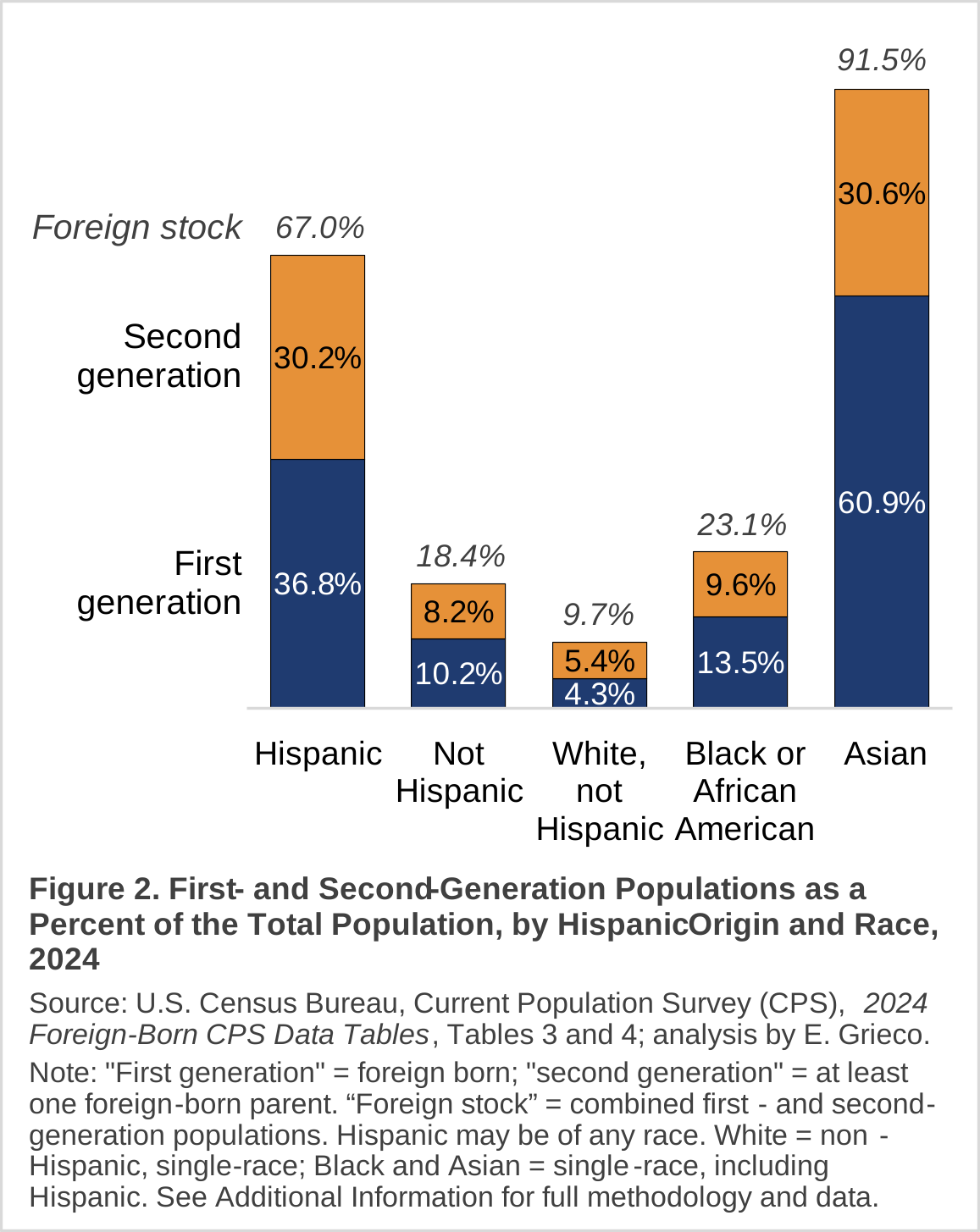
Behind the overall growth in foreign stock are striking differences by race and Hispanic origin. Among respondents who indicated their race as Asian in 2024, nine in ten (91%) were foreign stock, including six in ten (61%) immigrants and three in ten (31%) with at least one foreign-born parent (see Figure 2). Among Hispanics, 67% were foreign stock, split more evenly between 37% first generation and 30% second generation. The share of foreign stock was considerably lower for other race and Hispanic origin groups: 23% for Black respondents, 18% for non-Hispanic respondents, and 10% for White, non-Hispanics respondents.
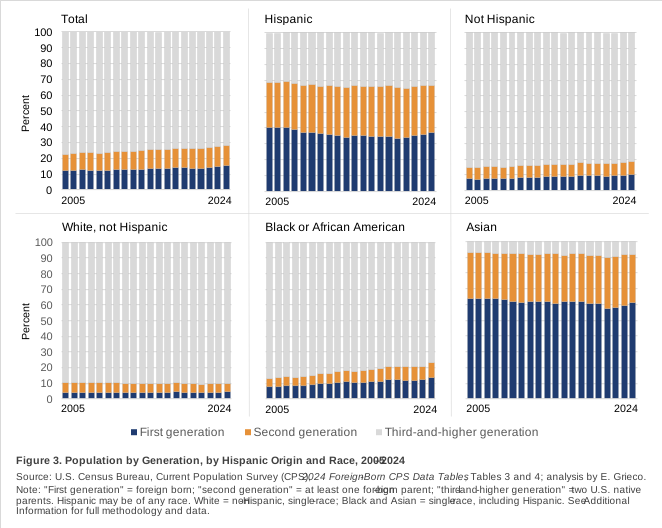
Trends since 2005 show that these differences across race and Hispanic origin groups have been persistent (see Figure 3). Foreign stock has consistently represented a large share of the Asian and Hispanic populations throughout the period, while remaining comparatively low among White non-Hispanics.

In contrast, the share of foreign stock among Black or African American respondents has grown steadily over the past two decades, reflecting increases in both first- and second-generation populations. Overall, the generational composition of these populations has remained broadly similar since 2005—even as their size has grown—reflecting differences in immigration histories as well as factors such as age at arrival and fertility and timing of births.
While some groups have a high share of first-generation immigrants, this does not always translate into a large share of the overall foreign-born population. Asians had the highest within-group share of first-generation immigrants at 61%, but accounted for 26% of the foreign-born population. Black or African American respondents were 14% first generation, but 12% of the foreign-born population. Among Hispanics, 37% were first generation, comprising 47% of the foreign-born population. White non-Hispanics were 4% first generation and 16% of the foreign-born population.
Additional Information
This article looks at the U.S. population by generation groups—first-generation immigrants, their second-generation children, and third-or-higher generation descendants—over the period from 2005 to 2024. Differences in generational composition across race and Hispanic origin groups reflect the recent migration histories of these communities.
The data come from the U.S. Census Bureau’s 2024 Annual Social and Economic (ASEC) supplement to the Current Population Survey (CPS). For more information about the CPS ASEC supplement, see: https://www2.census.gov/programs-surveys/cps/techdocs/cpsmar24.pdf. The estimates shown in the graphs and text were drawn from the Census Bureau’s 2024 Foreign-Born CPS Data Tables available at https://www.census.gov/data/tables/2024/demo/foreign-born/cps-2024.html, specifically Table 1: Population by Generation: 2005 to 2024, Table 3: Race by Generation, 2005 to 2024, and Table 4: Hispanic Origin by Generation, 2005 to 2024.
The CPS sampling universe includes the civilian noninstitutionalized population of the United States, plus members of the armed forces living off post or with their families on post, with at least one civilian adult.
Values presented in the text are rounded to whole percentages for clarity and readability. Percentages shown on the graphs include one decimal place to provide more detail. Details may not sum to totals because of rounding.
“First generation” refers to those who are foreign born; “second generation” refers to those with at least one foreign-born parent; and “third-and-higher generation” includes those with two U.S. native parents. “Foreign stock” combines the first- and second-generation populations.
Respondents who report a Hispanic origin may be of any race. Race groups shown include single-race respondents only. White respondents are non-Hispanic and single-race only; Black and Asian groups include Hispanic respondents and are single-race only.
Elizabeth M. Grieco, Ph.D.
Independent Researcher
March 15, 2026
Website: elizabethgrieco.com