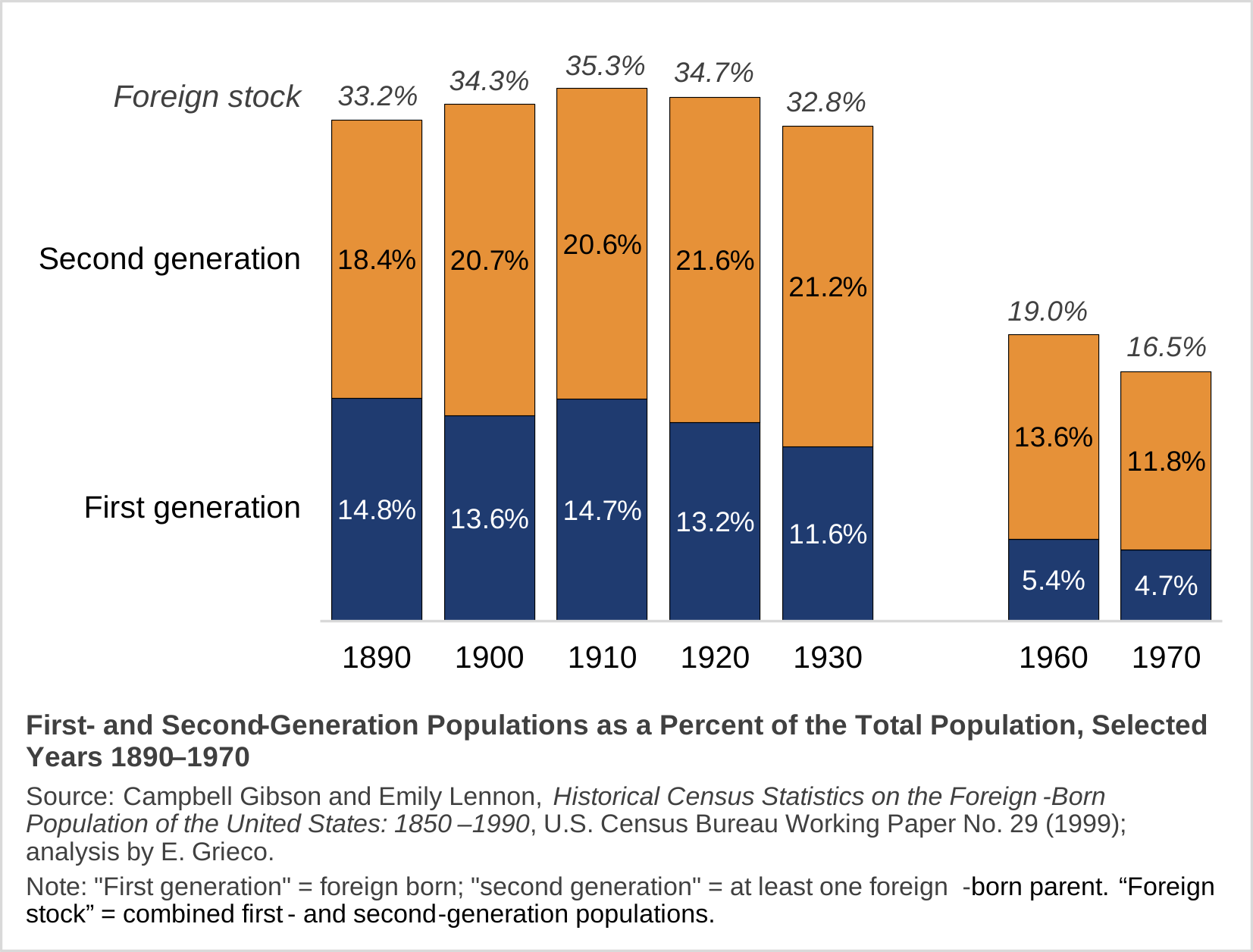
The share of Americans who are immigrants or have at least one foreign-born parent—also known as foreign stock—remains historically high today, though it is still below its early-20th-century peak. In the early 20th century, immigrants and the second generation made up more than one-third of the U.S. population, peaking at about 35% in 1910. The share then fell substantially by the mid-20th century, reaching a low of roughly 17% in 1970. Recent estimates place the combined first- and second-generation share at about 28% in 2024 (15.4% first generation and 12.6% second generation), still historically high but below the 1910 peak.
Additional Information
The data presented in this article for 1890-1970 were derived from Campbell Gibson and Emily Lennon, Historical Census Statistics on the Foreign-Born Population of the United States: 1850–1990, U.S. Census Bureau Working Paper No. 29 (1999). The source for the 2024 estimate was the U.S. Census Bureau’s 2024 Annual Social and Economic (ASEC) supplement to the Current Population Survey (CPS), specifically the 2024 Foreign-Born CPS Data Tables available at https://www.census.gov/data/tables/2024/demo/foreign-born/cps-2024.html.
“First generation” refers to those who are foreign born; “second generation” refers to those with at least one foreign-born parent; and “third-and-higher generation” includes those with two U.S. native parents. “Foreign stock” combines the first- and second-generation populations.
Elizabeth M. Grieco, Ph.D.
Independent Researcher
March 15, 2026
Website: elizabethgrieco.com