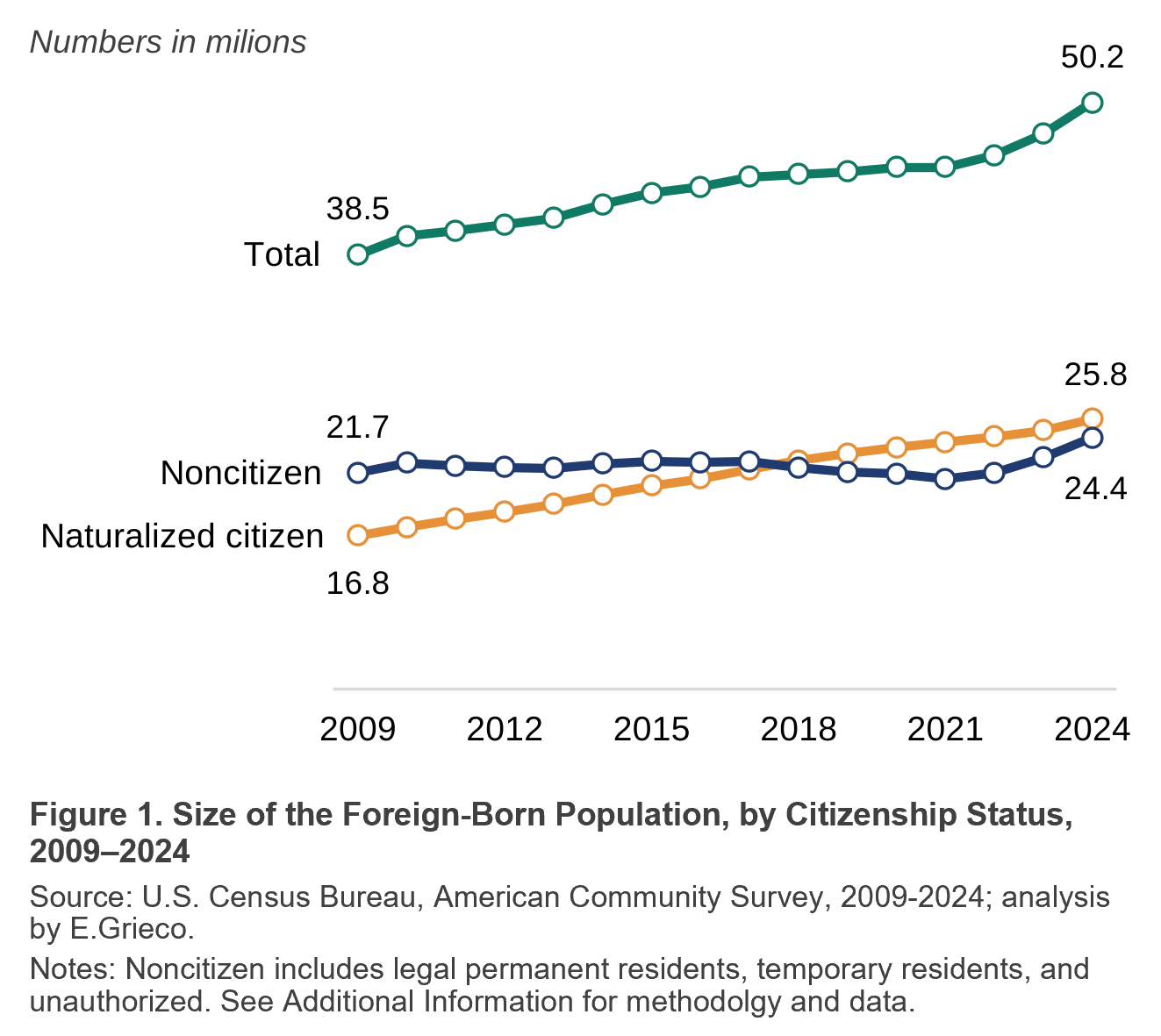
The foreign-born population grew from 38.5 million in 2009 to 50.2 million in 2024, an increase of roughly 11.7 million people. The largest share of that growth—about 42%—occurred between 2021 and 2024, while the previous four years accounted for only 13%. This recent surge was driven by a rebound in the number of noncitizens after 2020, coupled with the steady increase in naturalized citizens, marked by a dramatic turnaround in noncitizen growth rates between 2017–2020 and 2021–2024.
The data presented in this analysis come from the U.S. Census Bureau’s American Community Survey (see Additional Information below for more details).
Since 2009, the naturalized citizen and noncitizen populations have followed distinct growth patterns, resulting in a shift in the composition of the foreign-born population. Naturalized citizens increased steadily from 16.8 million in 2009 to 25.8 million in 2024, growing by an average of about 600,000 people per year (see Figure 1). In contrast, the noncitizen population remained relatively flat between 2009 and 2017, hovering around 22.3 million, before a continuous decline lowered it to 21.2 million in 2021. The number of noncitizens fell below that of naturalized citizens starting in 2018, and by 2024, with 24.4 million, noncitizens remain fewer in number than naturalized citizens.
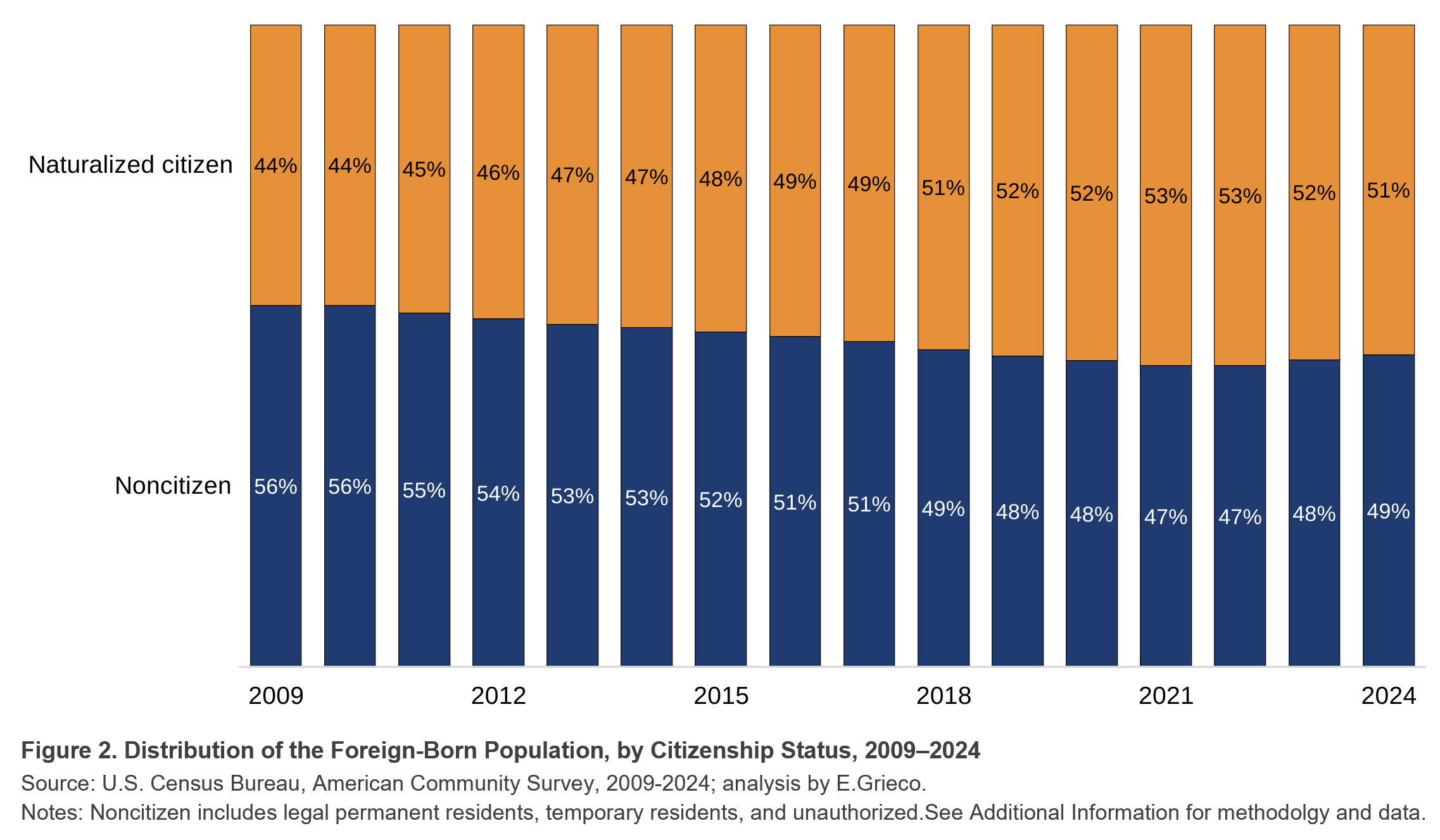
The distinct growth patterns of naturalized citizens and noncitizens have altered their shares of the foreign-born population. In 2009, noncitizens made up 56% of the total, compared with 44% naturalized citizens (see Figure 2). Over time, the noncitizen population’s flat growth and later decline, combined with the steady rise in naturalized citizens, shifted the balance. By 2024, naturalized citizens represented a slight majority at 51%, while noncitizens accounted for 49%.
The overall increase in the foreign-born population between 2009 and 2024 masks periods of very different change, with the early 2020s showing a clear uptick. The number of foreign born increased annually by an average of about 2% during 2009–12 (1.96%) and 2013–16 (1.89%), dropped to less than 1% during 2017–20 (0.56%), then jumped to 3.53% during 2021–24 (see Figure 3; growth is shown separately for each period).
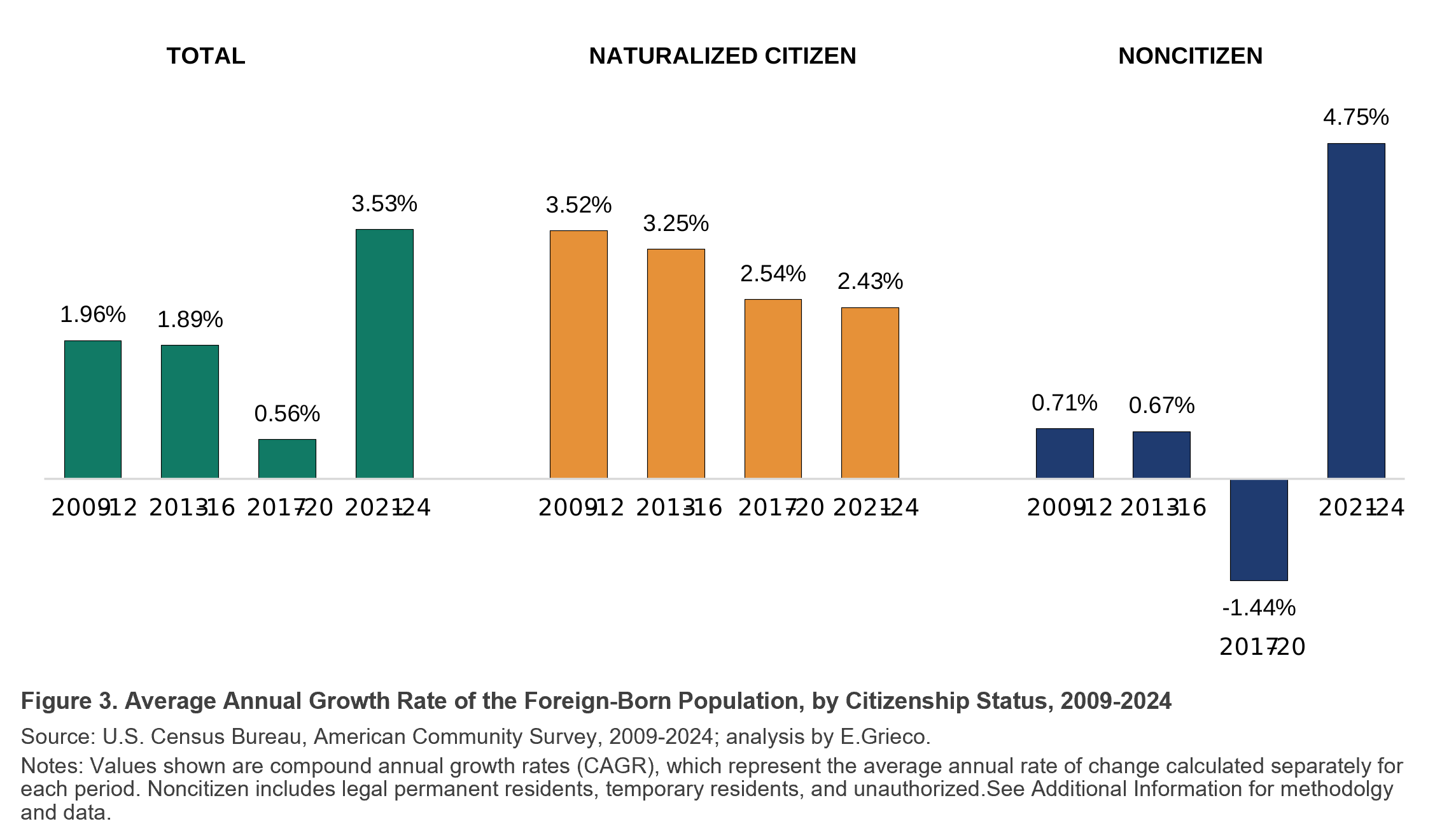
This pattern was driven by sharp changes in the growth of the noncitizen population. During the first half of the 2009-24 period, annual growth of noncitizens remained low and stable—less than 1% in both 2009–12 (0.71%) and 2013–16 (0.67%)—but shifted dramatically thereafter, declining by 1.44% annually in 2017–20 before increasing by 4.75% in 2021–2024. In contrast, growth in the number of naturalized citizens was more consistent over time, exceeding 3% annually in 2009–12 (3.52%) and 2013–16 (3.25%) and slowing modestly to about 2.5% in 2017–20 (2.54%) and 2021–24 (2.43%).
Additional Information
This article examines the foreign-born population in the United States between 2009 and 2024, focusing on naturalized citizens and noncitizens. During this period, the U.S. foreign-born population grew overall, but the total masks distinct periods of faster and slower growth and differences between these groups. In particular, the noncitizen population rebounded sharply in the early 2020s after a brief decline, driving much of the recent increase in the total foreign-born population.
The data come from the U.S. Census Bureau’s American Community Survey (ACS). The estimates shown in the graphs and text were derived using the Table Finder feature available on data.census.gov, specifically table B05002: Place of Birth by Nativity and Citizenship Status. ACS 1-year estimates were used for 2009–2019 and 2021–2024. For 2020, the ACS 2018–2022 5-year file was used to provide a midpoint estimate, as a 1-year file was not published.
The ACS universe covers the entire resident population of the United States and Puerto Rico, including both housing units (i.e., households) and group quarters (e.g., prisons, nursing homes, college dorms). It follows current residence rules, counting individuals where they live or stay, regardless of legal status or citizenship.
The foreign-born population includes individuals born outside the United States to noncitizen parents. Naturalized citizens are foreign-born individuals who have obtained U.S. citizenship through naturalization. Noncitizens include legal permanent residents (or “green card” holders), temporary visa holders, those in other temporary statuses, and unauthorized immigrants.
The annual rate of change was calculated using the compound annual growth rate (CAGR), a measure that summarizes how quickly a population grows on average each year over a specified period, accounting for compounding. CAGR expresses growth as a steady annual rate, making it easier to compare changes across periods of equal length. In this analysis, CAGR is used to compare growth in the foreign-born population and its components across intervals, providing a consistent measure of how growth rates have varied over time. Each period is calculated independently, focusing only on growth within that interval and not including changes that occur between periods.
Elizabeth M. Grieco, Ph.D.
Independent Researcher
April 5, 2026
Website: elizabethgrieco.com