The foreign-born population in the United States is highly concentrated across a small number of states—but the pattern changes when measured by the share of each state’s population.
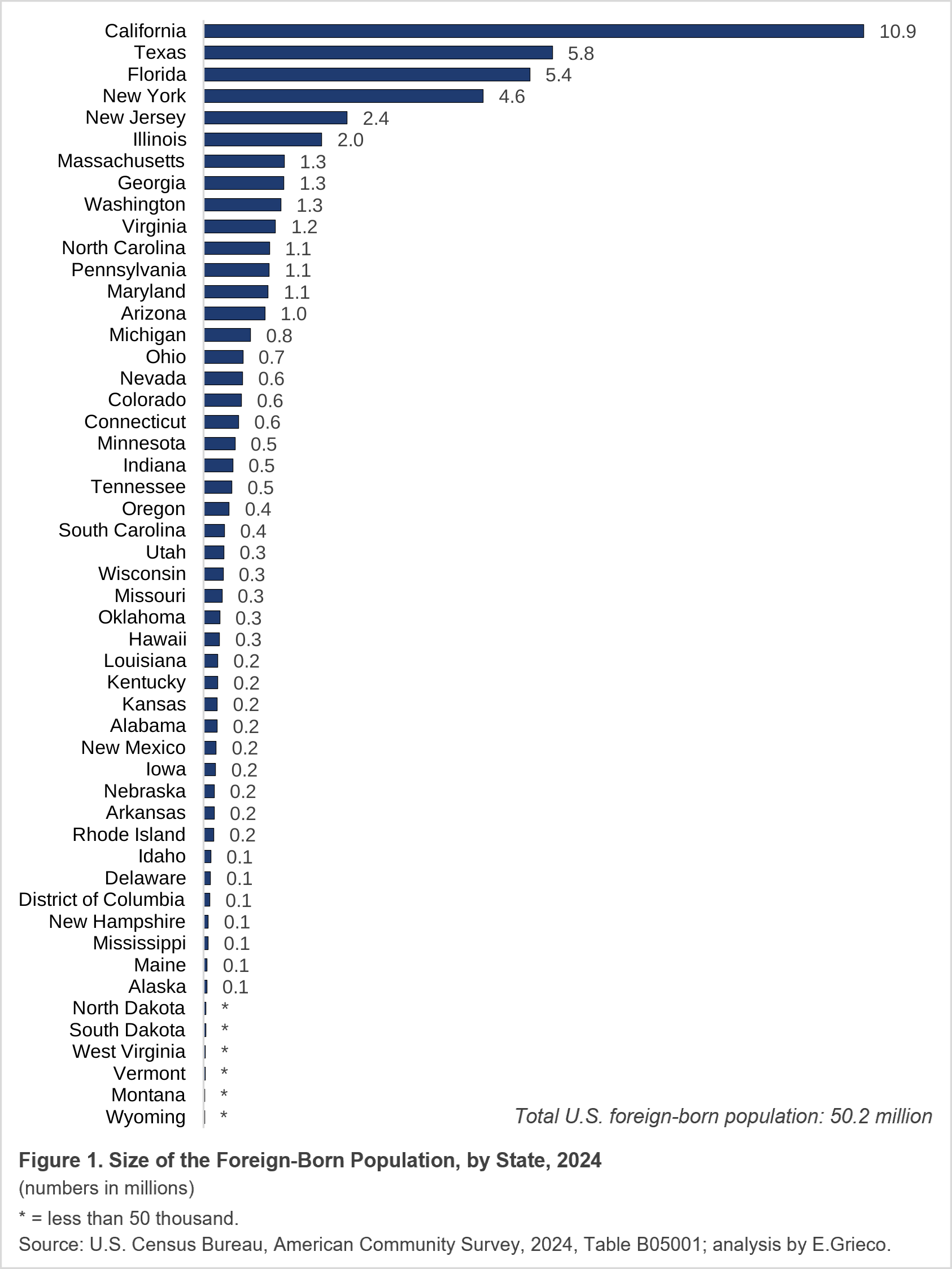
Of the 50.2 million foreign-born residents in the United States in 2024, over half (53%) lived in just four states: California (10.9 million), Texas (5.8 million), Florida (5.4 million), and New York (4.6 million) (see Figure 1). California alone accounted for 22%—or more than 1-in-5—of the U.S. foreign-born population.
The data presented in this analysis come from the U.S. Census Bureau’s American Community Survey (see Additional Information below for more details).
An additional 10 states had foreign-born populations of at least 1 million, including New Jersey (2.4 million), Illinois (2.0 million), Massachusetts, Georgia, and Washington (each about 1.3 million), Virginia (1.2 million), North Carolina, Pennsylvania, and Maryland (each about 1.1 million), and Arizona (1.0 million).
In total, 40.4 million foreign-born residents lived in these 14 states, accounting for 80% of the U.S. foreign-born population. In contrast, 10 states each had fewer than 100,000 foreign-born residents, including New Hampshire, Mississippi, Maine, Alaska, North Dakota, South Dakota, West Virginia, Vermont, Montana, and Wyoming.
A different pattern emerges when the foreign-born population is measured as a share of each state’s total population (see Figure 2).
California not only had the largest foreign-born population (10.9 million) and accounted for the largest share of the U.S. total (22%), but also had the highest share of foreign-born residents within its own population (28%).
In four additional states, at least 1-in-5 residents were foreign born: New Jersey (25%), New York and Florida (each 23%), and Nevada (20%).
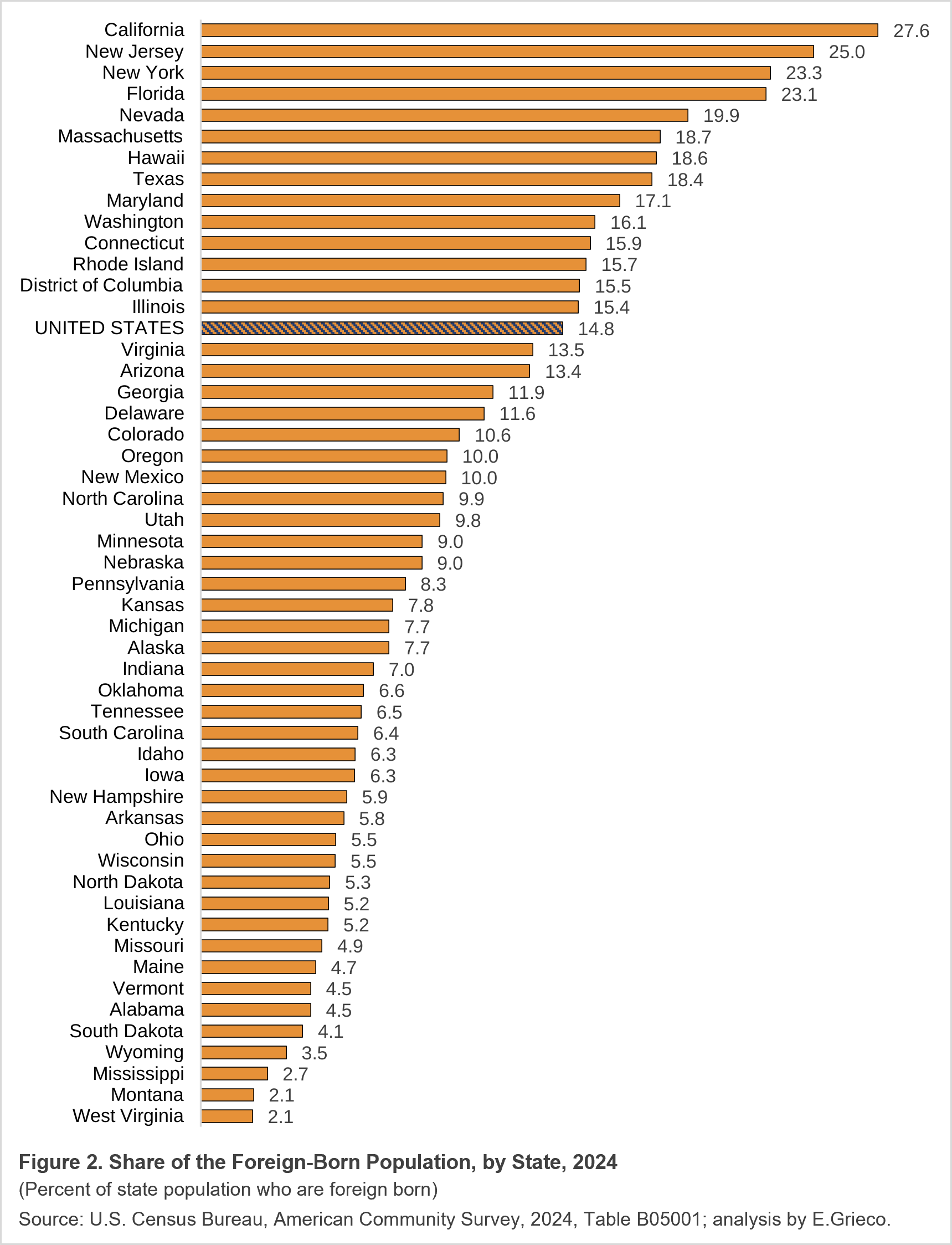
At the national level, nearly 15% of the population was foreign born in 2024, and nine other states matched or exceeded this share: Massachusetts and Hawaii (each about 19%), Texas (18%), Maryland (17%), Washington, Connecticut, and Rhode Island (each about 16%), and the District of Columbia (DC) and Illinois (each about 15%).
Most states have a much smaller share of foreign-born residents. In 32 states, the foreign-born share was 10% or less, including 12 states where the share was 5% or less. Montana and West Virginia, at about 2% each, were among the states with the smallest shares of foreign-born residents.
At both ends of the distribution, a similar pattern holds: the largest foreign-born populations and highest shares are concentrated in states such as California, Florida, New York, and New Jersey, while the smallest populations and lowest shares largely overlap in South Dakota, West Virginia, Montana, and Wyoming.
Between these extremes are 18 “mixed” states where the two measures diverge—by at least 10 ranking positions in each case, and in some instances by more than 20—underscoring how population size and concentration capture different dimensions of immigrant settlement.
DC, Rhode Island, Hawaii, Delaware, Alaska, New Mexico, Nevada, and Nebraska rank higher by foreign-born share than by total foreign-born population, while Ohio, Missouri, Pennsylvania, Alabama, Wisconsin, Michigan, Kentucky, Louisiana, North Carolina, and Tennessee exhibit the opposite pattern, with lower rankings by share than by total foreign-born population.
Additional Information
This article examines the geographic distribution of the foreign-born population across U.S. states in 2024, focusing on both total counts and population shares. While a small number of states account for most of the foreign-born population in absolute terms, the pattern shifts when measured relative to each state’s total population.
The data come from the U.S. Census Bureau’s American Community Survey (ACS). The estimates shown in the graphs and text were derived from the 2024 ACS 1-year file using Table Finder on data.census.gov, specifically Table B05001: Nativity and Citizenship Status in the United States. All estimates are subject to sampling error, and all comparative statements have been tested for statistical significance at the 0.10 (90% confidence) level.
The District of Columbia is treated as a state equivalent for statistical purposes in this analysis.
The ACS universe covers the entire resident population of the United States and Puerto Rico, including both housing units (i.e., households) and group quarters (e.g., prisons, nursing homes, college dorms). It follows current residence rules, counting individuals where they live or stay, regardless of legal status or citizenship.
The foreign-born population includes individuals born outside the United States to noncitizen parents (i.e., not U.S. citizens at birth).
Elizabeth M. Grieco, Ph.D.
Independent Researcher
April 19, 2026
Website: elizabethgrieco.com